
Explore the power of content marketing in higher education to boost enrollment and engage students with our targeted strategies and insights.

Have you ever wondered why, despite your best efforts, the numbers just don't add up?
The higher education field is evolving, and with it, the strategies to engage potential students must also adapt. In an era where information is at everyone's fingertips, traditional marketing methods are no longer sufficient.
The decline in enrollment numbers is an issue influenced by demographic shifts, the rising cost of tuition, and a growing scepticism about the value of a traditional college degree. A strategic content approach goes beyond traditional advertising to engage, inform, and inspire prospective students and their families.
But how exactly can content marketing turn the tide?
Using content marketing without a solid plan is like setting sail without a map. You need a clear understanding of where you're heading, and this starts with defining your objectives.
Are you looking to increase overall enrollment, enhance the visibility of specific programs, or boost your institution's brand awareness? Each goal requires a unique approach.
Understanding your audience is important. Today's prospective students range from traditional high school graduates to adult learners looking for a career change. Each segment has different needs, preferences, and concerns. Creating personas for these segments helps tailor your message more effectively.
An audit of your current content needs can reveal what resonates with your audience and where there are gaps. Equally, a look at your competitors can offer insights into what's working for them—and how you can do it differently, or better.
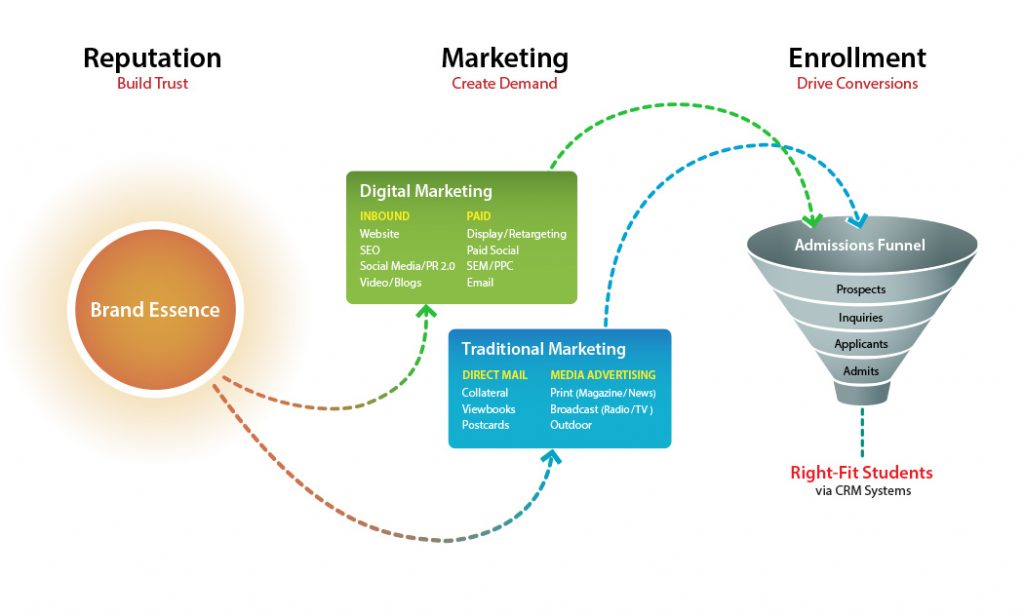
The heart of your content marketing effort lies in creating content that attracts and deeply engages your prospective students. It's about answering their questions and providing value that goes beyond generic promotional material.
Source: Tint
Start with your audience's questions and concerns. Forums, social media, and direct inquiries are goldmines of information. What are prospective students anxious about? What misconceptions might they have about higher education? Addressing these directly can set your institution apart as a trusted resource.
Trending topics in education also provide a rich vein of content ideas. Whether it's the rise of e-learning, sustainability on campus, or diversity and inclusion initiatives, showing how your institution engages with these issues can significantly boost your appeal.
The format of your content plays a crucial role in how it's received. A mix of formats ensures you engage different types of learners and preferences:
Visibility is needed. Your content needs to reach your audience when they're searching for information. SEO is the bridge between your content and your prospective students. It starts with understanding the keywords your audience uses in their search queries. Incorporating these keywords naturally into your content helps improve your visibility on search engine results pages.
But SEO goes beyond keywords. It's about creating quality content that earns backlinks, optimizing your website's technical setup for search engines, and ensuring your site is mobile-friendly.
Remember, the majority of your audience will likely access your content on a mobile device.
Social media offers a direct line to engage with your audience. But it's not a one-size-fits-all solution. Each platform has its unique audience and best practices:
The key is consistent, authentic engagement. Encourage current students and alumni to share their experiences, and don't forget to interact with your followers through comments and direct messages.
Content marketing in higher education is a powerful tool, but it comes with its own set of challenges. To avoid common pitfalls:
Content marketing represents a sustained approach rather than an immediate solution. It requires commitment, creativity, and flexibility. By staying focused on your audience's needs and continuously optimizing your efforts, you can achieve significant results in addressing declining enrollment trends.
To Sum Up…
As we've explored, content marketing in higher education is a multifaceted strategy capable of addressing some of the most pressing challenges facing institutions today, particularly declining enrollment.
Keep in mind, that the digital realm is constantly changing, and your strategies need to adapt accordingly. Stay informed, stay flexible, and always keep your audience's needs and preferences at the forefront of your content marketing efforts.
Thinking about boosting your content marketing? Let's chat with our education marketing consultants in UAE who are having a decade of experience. Schedule an expert session with Ubrik Media and see how we can help your institution stand out.
Content marketing strategies should be reviewed and updated at least quarterly. However, it's essential to remain flexible and responsive to any significant changes in your audience's behaviour or preferences, emerging trends in higher education, or your institution's goals that may necessitate more frequent adjustments.
Absolutely. A well-executed content marketing strategy that includes SEO optimization can significantly improve your institution's search engine ranking. By creating relevant, valuable content that answers your target audience's queries and optimizing it for search engines, you can increase your website's visibility, attract more traffic, and potentially improve your overall ranking.
User-generated content, such as testimonials from students and alumni, social media posts, and reviews, plays a crucial role in building authenticity and trust. Prospective students often value the experiences and opinions of their peers, making such content a powerful tool for influencing their decision-making process.
Measuring the ROI of content marketing involves tracking key performance indicators (KPIs) linked to your goals, such as application numbers, website traffic, and engagement metrics, and then relating these back to the costs involved in creating and distributing your content. Tools and platforms that offer analytics can help track these metrics, enabling you to calculate your content marketing's direct impact on enrollment and engagement.
It's critical. Your content marketing strategy should be a cohesive part of your overall marketing and branding efforts, reflecting and reinforcing your institution's values, messages, and brand identity. This alignment ensures a consistent experience for prospective students across all touchpoints, which is vital for building recognition and trust.